Explain the physiological factors that affect airway resistance.
CICMWrecks answer
Master answer
Airway Resistance
Resistance is the impedence to flow.
Normal Airways Resistance (AWR):
Adult: ~2 cmH2O/L/s
Newborn: ~20 cmH2O/L/s – declines markedly
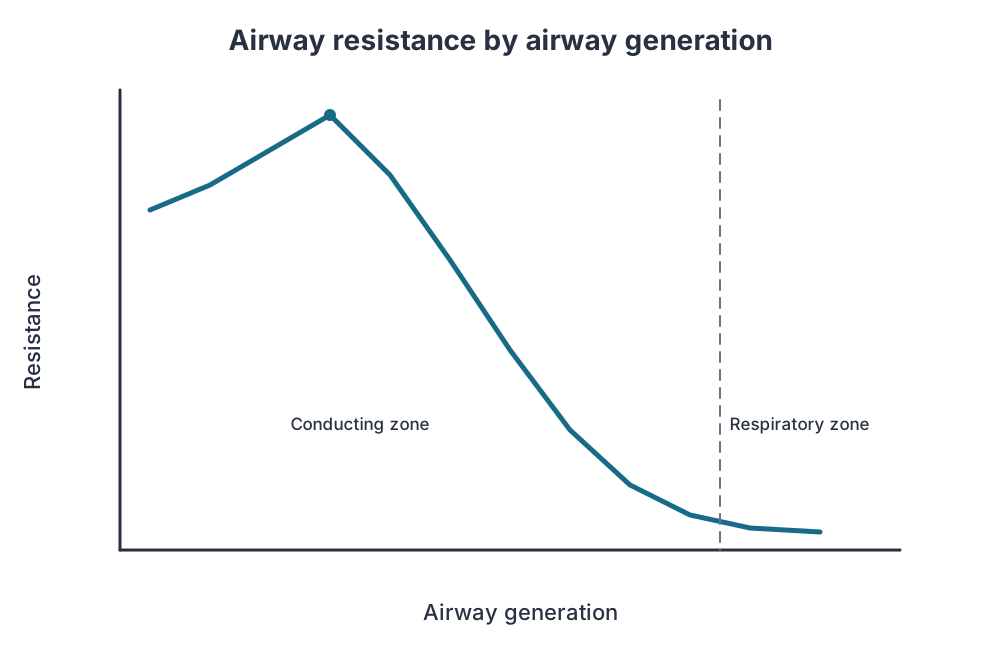
Main Site of AWR:
Mid-sized bronchi 7th/8th generation
comparatively smaller cross-sectional area
(note that in neonates, a greater proportion of Raw comes from the smaller peripheral airways)
In the airway flow can be laminar or turbulent
Flow depends on Depends on Reynolds number
CICMWrecks original diagram
where Re is Reynold’s number r is radius ρ is density v is velocity η is viscosity
Laminar Flow
Ordered flow occuring in concentric layers within a tube
Flow in the center is fastest and flow in the most peripheral layer is the slowest
Resistance to laminar flow obeys the Poisuille-Hagen Equation
where R is vessel resistance η is viscosity L is length of vessel r is radius of vessel
Increases in viscosity of gas, or length of the tube increase resistance
Increases in radius of the tube, decreases resistance by a power of 4
Turbulent Flow
In turbulent flow, due to the disorganized flow and increased likelihood of friction with the static airway wall, resistance is markedly increased.
Resistance to turbulent flow obeys the following equation
where R is Resistance to flow ρ is density l is length of vessel r is radius of vessel
Increases in density of gas, or length of the tube increase resistance
Increases in radius of the tube, decreases resistance by a power of 5
Factors affecting Airway Resistance
Physics factors (see above):
Location in the airway (see above): Mid-sized bronchi are the location of greatest airway resistance, resistance progressively declines with successive airway generations
Flow:
Laminar Flow vs turbulent flow
Depends on Reynolds number factors
density more important than dynamic viscosity, velocity (flow rate) as Main Site is Turbulent.
Flow rate:
Flow related airway collapse
Airways beyond generation 11 have no structural rigidity
High flows can reverse transmural pressure gradient and cause airway collapse
Newborn: ~20 cmH2O/L/s – declines markedly with age to ~2 cmH2O/L/s
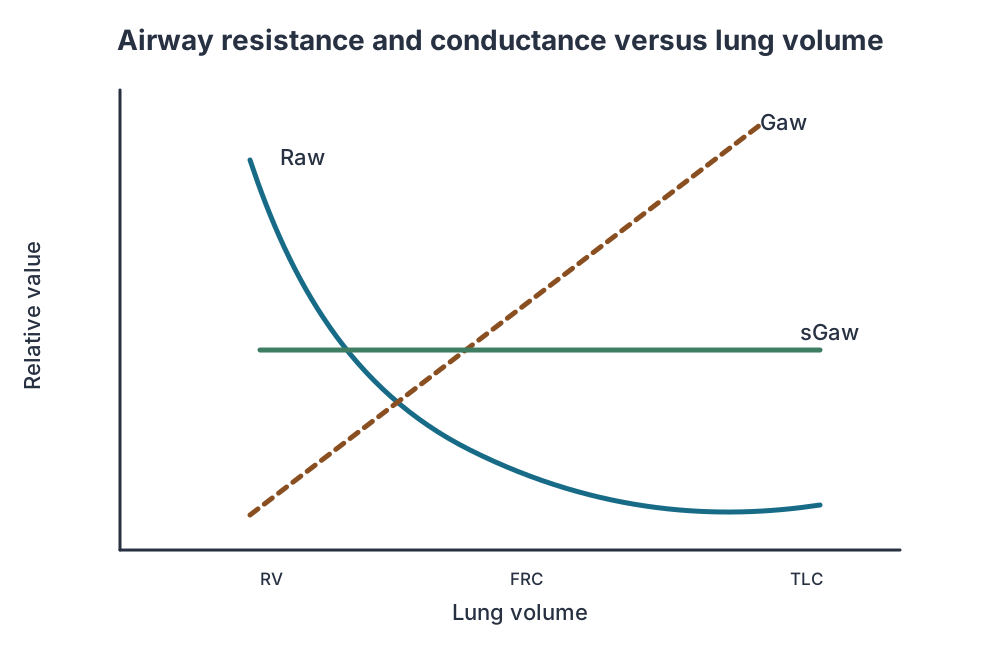
Radius changes
Muscular control of airway diameter
Neural:
Parasympathetics important in bronchomotor tone → airway constriction via ACh and muscarinic receptors
Sympathetic system virtually absent in lung
Hormonal:
Although no symppathetic innervation, abundance of β2 adrenoceptors → airway dilation