Past Papers · SAQ
Cardiorespiratory Changes in Pregnancy
2026A Q07
Exam questionDescribe the cardio-respiratory changes that occur throughout pregnancy (excluding parturition). Include in your answer the factors responsible for these changes.
CICMWrecks answer
Master answer
Cardiovascular changes
| Change | Timing / magnitude | Mechanism |
|---|---|---|
| SVR ↓ | Begins early; falls ~20–30%, nadir around mid-pregnancy | Progesterone, relaxin and increased nitric oxide → vasodilatation; development of a low-resistance uteroplacental circulation |
| BP ↓ | Mainly 1st–2nd trimester; DBP/MAP fall ~10–15 mmHg; trends back toward baseline near term | ↓ SVR despite increased cardiac output |
| Cardiac output ↑ | Begins by early 1st trimester; ↑ ~30–50%, near maximal by 2nd trimester | ↑ HR + ↑ stroke volume; initially facilitated by ↓ afterload, later by plasma-volume expansion and ↑ venous return |
| Heart rate ↑ | Progressive; ~10–20 beats/min above baseline by term | Physiological response to reduced SVR and increased metabolic demand |
| Stroke volume ↑ | Mostly early–mid pregnancy | ↓ afterload + ↑ preload from expanded blood volume |
| Plasma volume ↑ | Progressive from early pregnancy; ~40–50% by term | RAAS activation, aldosterone and ADH → Na⁺/water retention; oestrogen contributes |
| RBC mass ↑ | ~20–30%, less than the rise in plasma volume | Increased erythropoietin → physiological dilutional anaemia |
| Venous capacitance ↑ | Progressive | Hormonal venodilatation |
| Colloid oncotic pressure ↓ | Progressive | Haemodilution from disproportionate plasma-volume expansion |
| Uterine blood flow ↑ markedly | Progressive with gestation | Enlarging uteroplacental circulation + low vascular resistance |
| Heart position / size | More obvious later | Gravid uterus elevates diaphragm → heart displaced superiorly and leftward; mild chamber enlargement / physiological hypertrophy |
| Supine venous return may ↓ | Especially after ~20 weeks | Gravid uterus compresses IVC ± aorta → reduced preload; usually compensated by collateral flow and sympathetic response |
Key sequence: hormonal vasodilatation → ↓ SVR / ↓ BP → compensatory ↑ HR and stroke volume + activation of RAAS/ADH/aldosterone → plasma-volume expansion → further ↑ preload and cardiac output.
Respiratory changes
| Change | Timing / magnitude | Mechanism |
|---|---|---|
| Ventilatory drive ↑ | Begins in 1st trimester | Progesterone increases central respiratory sensitivity to CO₂ |
| Tidal volume ↑ | Early and progressive; ~30–40% | Increased respiratory drive |
| Minute ventilation ↑ | ~30–50% | Predominantly ↑ tidal volume; respiratory rate is unchanged or only slightly increased |
| Alveolar ventilation ↑ | ~40–50% | ↑ tidal volume → proportionally greater effective ventilation |
| PaCO₂ ↓ | Early; ~28–32 mmHg | Increased alveolar ventilation |
| HCO₃⁻ ↓ | ~18–21 mmol/L | Renal compensation for chronic respiratory alkalosis |
| pH slightly ↑ | ~7.42–7.44 | Chronic compensated respiratory alkalosis |
| PaO₂ slightly ↑ | Particularly early pregnancy | Lower PaCO₂ increases alveolar PO₂; may trend closer to normal near term |
| O₂ consumption ↑ | Progressive; ~20% at term | Maternal + fetoplacental metabolic demand |
| Diaphragm rises | Progressive; ~4 cm by term | Expanding uterus |
| Chest circumference / subcostal angle ↑ | Progressive | Hormonal ligamentous relaxation + altered thoracic geometry |
| FRC ↓ | Mainly later pregnancy; ~20% | Diaphragmatic elevation → ↓ ERV and ↓ RV |
| ERV ↓ / RV ↓ | Progressive | Mechanical effect of gravid uterus |
| TLC slightly ↓ | ~5% | Reduced RV/FRC despite expansion of thoracic dimensions |
| Inspiratory capacity ↑ | ~5–10% | Compensation for reduced FRC |
| Vital capacity ≈ unchanged | Throughout | ↑ inspiratory capacity largely offsets ↓ expiratory reserve volume |
| FEV₁, FVC, FEV₁/FVC ≈ unchanged | Throughout | No major intrinsic change in expiratory airflow |
| Upper-airway mucosal oedema / vascularity ↑ | Progressive | Oestrogen + increased blood volume / capillary engorgement |
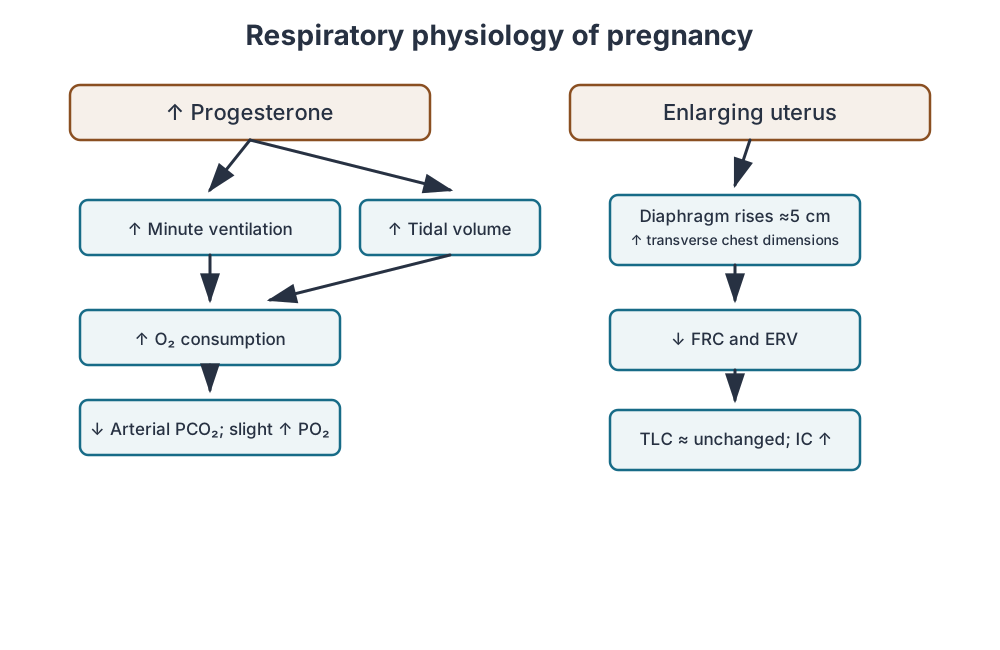
Integrated consequences
- Progesterone-driven hyperventilation produces a chronic compensated respiratory alkalosis.
- ↓ FRC + ↑ O₂ consumption reduces maternal oxygen reserve → more rapid desaturation during apnoea.
Typical arterial blood gases
| Variable | Typical pregnancy value |
|---|---|
| pH | 7.42–7.44 |
| PaCO₂ | 28–32 mmHg |
| HCO₃⁻ | 18–21 mmol/L |
| PaO₂ | ~100–105 mmHg |
Quick reference
Summary
| System | Principal change | Main driver |
|---|---|---|
| Vascular | ↓ SVR | Progesterone / relaxin / NO + placental circulation |
| Circulation | ↑ cardiac output 30–50% | ↑ HR + ↑ stroke volume |
| Volume | ↑ plasma volume 40–50% | RAAS / aldosterone / ADH |
| Ventilation | ↑ minute ventilation 30–50% | Progesterone → ↑ CO₂ sensitivity |
| Gas exchange | PaCO₂ ~30 mmHg | ↑ alveolar ventilation |
| Lung volume | ↓ FRC ~20% | Enlarging uterus / diaphragmatic elevation |
| Metabolism | ↑ O₂ consumption ~20% | Maternal + fetoplacental demand |
Past papers
Exam appearances
| Exam | Exact exam wording | Candidate success |
|---|---|---|
| 2026A Q07 | Describe the cardio-respiratory changes that occur throughout pregnancy (excluding parturition). Include in your answer the factors responsible for these changes. | 57.8% |